
Digital protocols for offices and workspaces
Handover, inspection and condition evidence—for offices, coworking and flexible workspaces.
Offices and workspaces change users, teams and equipment often. deep.rent documents handover, takeback, inventory, damage and cleaning in one guided flow—with photos, checklists, PDF and signature.
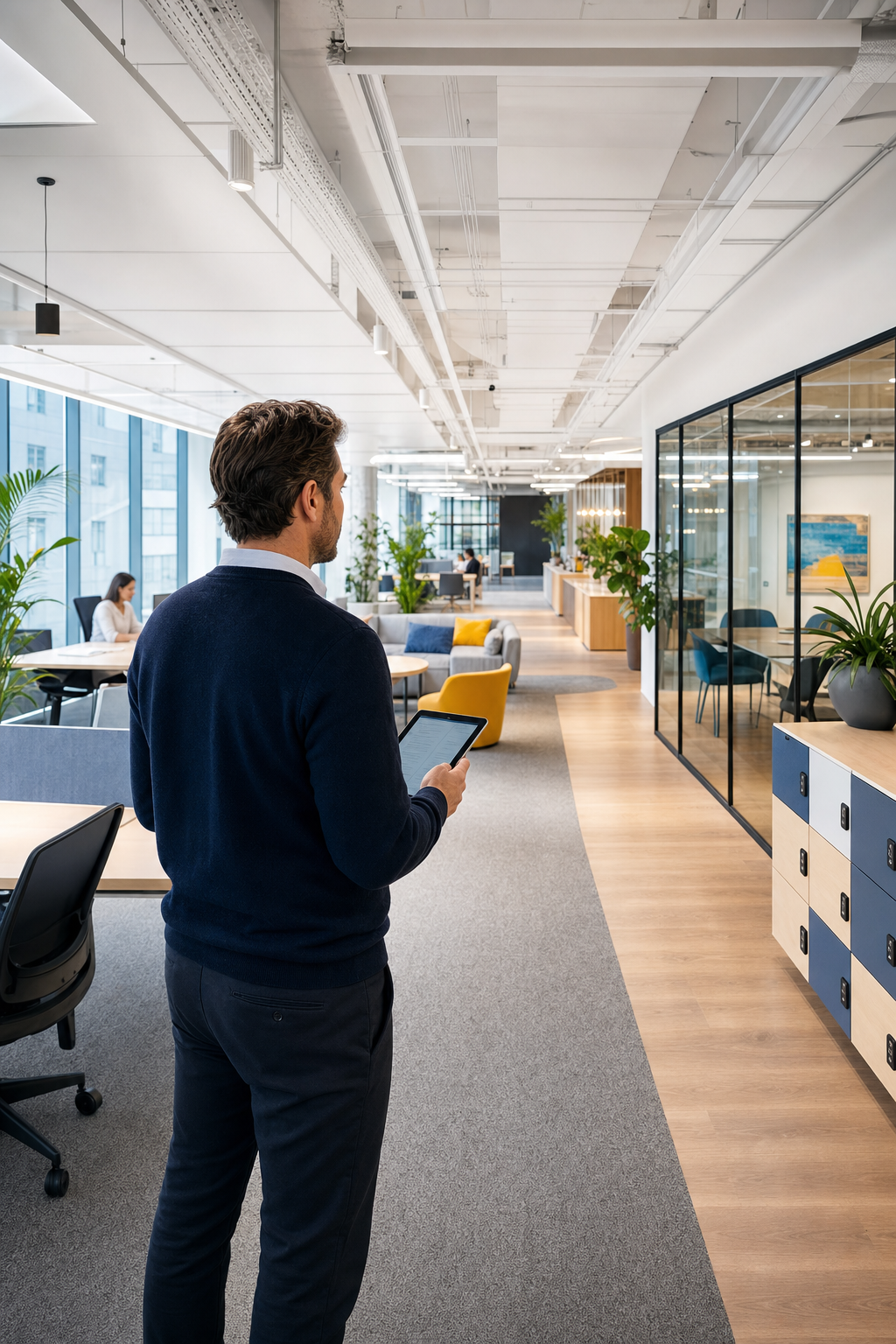
Workspace operations need clear condition records
Beyond rooms, desks, meeting spaces, technology, access, inventory and cleaning all matter.
Without a structured handover protocol, questions arise around damage, missing inventory and agreed condition—especially with team changes and short terms. deep.rent replaces scattered photo folders and Excel lists with guided capture per area.
Relevant protocol types for office and workspace
Handover, takeback, inspection and inventory—aligned with flexible spaces.
-
Office handover protocol
Move-in and handover with space, inventory and access.
-
Workspace takeback protocol
Move-out, team change or contract end with condition comparison.
-
Inspection protocol
Recurring checks for space, technology and shared areas.
-
Meter reading report
Electricity, heat and water with photo at handover and takeback.
-
Damage report
Furniture, technology and defects with photos and status.
-
Cleaning report
Document handover cleaning and ongoing floor checks.
-
Safety report
Access, escape routes and safety points in offices and shared areas.
Why loose photos fail office spaces
In workspaces, damage, cleaning and inventory often depend on many small details. Without area context, photos and responsibility quickly drift apart.
- Photos without room or workstation
- Inventory lists separated from the handover protocol
- Unclear condition during user or team changes
Areas, media and checklists in one flow
deep.rent guides teams through spaces, desks, meeting rooms and common areas. Photos stay in context—and the PDF can be shared immediately.
Clarify damage, cleaning and inventory fairly
Whether deposit, service charge or internal cost center: a structured record shows what exists, what is damaged, what was cleaned and what remains open.
-
Before / after
Compare handover and takeback in the same structure.
-
Inventory in place
Document furniture and technology directly in the relevant area.
-
PDF for all parties
Tenant, operator and owner receive the same record.
Typical tasks for offices and workspaces
Situations where structured documentation saves time and disputes.
-
Office handover
Document space, desks, keys, access and technology at move-in.
-
Workspace takeback
Capture condition at move-out or team change with photos and open items.
-
Document inventory
Record desks, chairs, monitors, lockers and special equipment per area.
-
Meeting room check
Check media equipment, furniture and cleaning before or after use.
-
Coworking area inspection
Standardize checks for shared desks, phone booths, lounge and common areas.
-
Damage and defects
Secure scratches, stains, defects and missing equipment with room context.
-
Cleaning acceptance
Assess offices, sanitary areas, kitchenette and common spaces at handover.
-
Fit-out and layout changes
Document before/after for new desks, partitions or furniture.
Where it is used
Typical office and workspace environments for digital protocols.
-
Traditional office space
Move-in, move-out and recurring inspections on office floors.
-
Coworking spaces
Changing users, shared areas and inventory documented traceably.
-
Serviced offices
Furnished offices with services and short contract terms.
-
Business centers
Many units with recurring checklists and fast PDF output.
-
Meeting and conference areas
Technology, furniture, damage and cleaning before or after events.
-
Corporate offices
Internal moves, team changes and space returns documented.
Benefits for office and workspace operators
-
Faster handovers
Guided checklists instead of custom Word or Excel sheets.
-
Fewer disputes
Damage, cleaning and inventory are evidenced with photos.
-
One standard for every team
Operations, facility and leasing work in the same flow.
Document office and workspace handovers digitally
A digital office handover protocol keeps space, desks, inventory, technology and cleaning in one flow—with photos per area and PDF for tenant, operator and owner. The same applies to takeback at move-out or team change.
For coworking, serviced offices, business centers and traditional office leasing, structured checklists replace scattered photo folders—so handover, inspection, inventory and damage stay comparable across units and teams.