


Digital protocols for the construction industry

Document construction sites, acceptances, walkthroughs, defects, progress and handovers in a structured, traceable and complete way.

Whether you are a Construction Manager, Site Supervisor, General Contractor, Subcontractor, Architect, Structural Engineer, Project Manager, Lessor, Renter, Seller, Buyer, Appraiser or Owner: in construction, clean documentation is essential for traceability, quality, liability protection, schedule control and professional project delivery. With deep.rent, you can create site diaries, acceptance protocols, handover protocols, defect reports, damage reports, inspection reports, safety reports, progress reports, walkthrough protocols, appraisals and other construction documentation fully digitally – with checklists, photos, PDF, signature and archive.

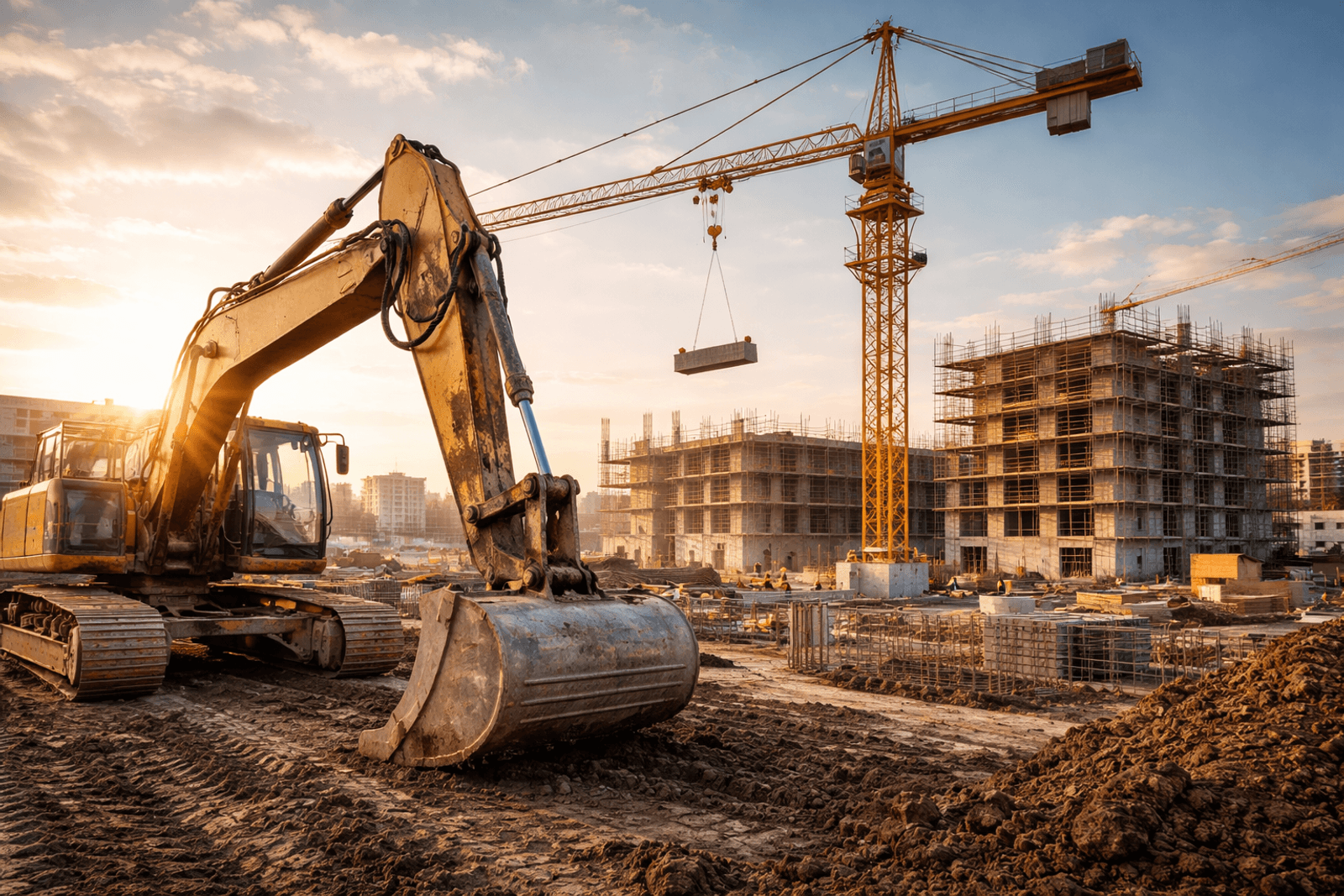
Large construction site with cranes, shell building and urban surroundings – digital construction documentation

Digital documentation for construction sites, building projects, buildings and project phases

The construction industry depends on traceable conditions, clear responsibilities and reliable records. Whether site documentation, construction progress, acceptance, defect capture, safety checks, walkthroughs or handovers: anyone who professionally plans, supervises, executes or evaluates construction projects needs complete and objective documentation.

deep.rent supports digital protocol creation for new builds, conversions, fit-outs, refurbishments, shell construction, interior fit-out, commercial construction, residential construction, technical trades, site areas and other construction-related assets. Instead of incomplete paper protocols, you get structured reports with checklists, photos, defects, construction progress, signatures and PDF export – directly on site or through the self-service portal.

Who is deep.rent suitable for in construction?

The platform is suitable for companies and professionals who document, inspect or coordinate construction sites, building works, conditions, defects, progress, acceptances or handovers.

  • Construction Manager

    For site management, construction site inspections, acceptances, progress documentation, defect capture and traceable communication with all project participants.

  • Site Supervisor

    For site supervision, walkthrough protocols, safety checks, quality inspections and documented findings on the construction site.

  • General Contractor

    For structured documentation of construction progress, trades, defects, handovers, acceptances and records toward clients and partners.

  • Subcontractor

    For documenting own services, conditions, execution status, handovers, defect handling and confirmations on site.

  • Architect

    For walkthroughs, condition documentation, planning versus execution checks, acceptance support and traceable project communication.

  • Structural Engineer

    For technical assessments, condition findings, photo documentation, defect notes and documented findings on structural components and constructions.

  • Project Manager

    For project steering, progress reports, defect tracking, handovers, acceptances and documented status reporting.

  • Lessor

    For documented conditions, construction acceptances, handovers and records for leased or lease-related building assets.

  • Renter

    For traceable documentation of conditions, handovers, defects or construction-related findings from a user perspective.

  • Seller

    For sales documentation, condition reports, property handovers and records of construction or fit-out condition.

  • Buyer

    For acceptance protocols, condition checks, defect capture and transparent documentation before or during takeover.

  • Appraiser

    For structured appraisals, condition documentation, photo evidence, construction findings and standardized on-site recording.

  • Owner

    For transparency on construction progress, defects, acceptances, handovers and traceable records of property condition.

Which protocol types can be created in construction?

deep.rent is not limited to a single form. Instead, various protocols, reports and documentation types can be mapped digitally – including custom templates for construction management, supervision, execution, acceptance and evaluation.

  • Site diary

    For daily or regular documentation of construction progress, weather, workforce, special events, disruptions and findings on site.

  • Acceptance protocol

    For the acceptance of construction services, project phases, trades, apartments, building sections or technical services with documented findings and defects.

  • Handover protocol

    For handing over construction assets, rooms, areas, units, trades or responsibilities with traceable condition documentation.

  • Defect report

    For defects, deviations, poor workmanship, missing services, damage and other identified irregularities on site.

  • Damage report

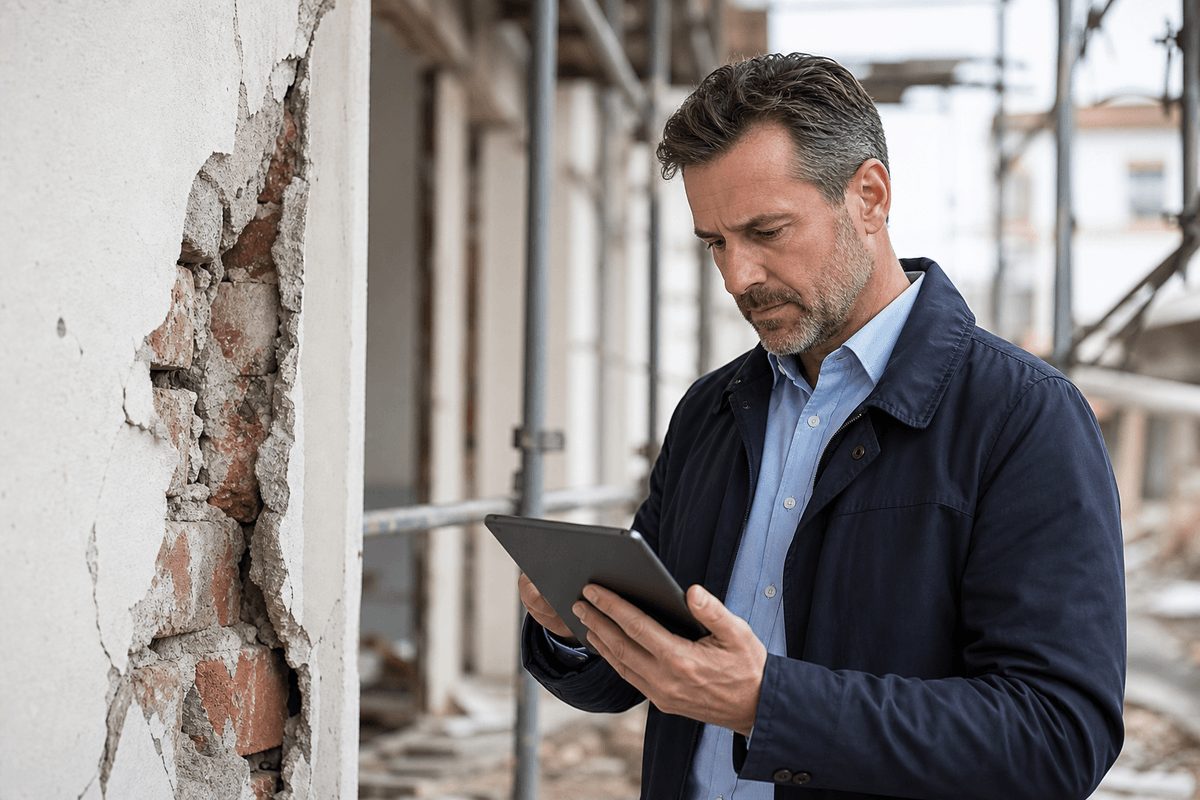
    For damage, breakage, moisture, cracks, defects, material failures or other damage events on construction sites or buildings.

  • Inspection report

    For structured walkthroughs, condition checks, visual inspections and traceable documentation of specific areas or trades.

  • Safety report

    For safety checks, site safety, protective measures, irregularities and documented actions on the construction site.

  • Progress report

    For documented construction progress, performance status, partial completions and traceable project status reporting.

  • Walkthrough protocol

    As a general protocol for site walkthroughs, property walkthroughs, condition findings and inspection rounds with freely definable checklists and fields.

  • Appraisal

    For structured assessment, condition analysis, construction evaluations, photo documentation and traceable findings.

  • Control protocol

    For regular or one-time checks of services, conditions, safety aspects or project phases.

Why is documentation so important in construction?

Documentation is not just a formality. It is evidence, protection, a communication basis and part of professional construction and project organization.

  • Proof of construction progress and execution

    Only those who transparently document conditions, services, progress, defects and changes can properly prove and manage construction workflows.

  • Transparency for clients, owners and buyers

    Participants expect clear records showing how a construction project was executed, supervised, accepted, handed over and documented.

  • Protection in cases of defects, damage and disputes

    In the case of deviations, defects, change orders, delays or disputed conditions, complete documentation often determines enforceability and credibility.

  • Evidence for quality, safety and responsibility

    Execution quality, safety measures, conditions and findings can only be properly proven if they were documented.

  • Professional processes

    A structured digital documentation process saves time, reduces errors and demonstrates a clear and professional way of working to developers, owners, partners and teams.

  • Clarity for all involved

    Construction management, execution, planning, owners, buyers and appraisers all see the same documented condition. That reduces misunderstandings and disputes.

The challenge of objective documentation

In practice, many construction protocols fail not because of intent, but because of unclear workflows, missing structure and subjective perception.

Without clear checklists and guided capture, important components, execution details or checkpoints are quickly forgotten. Later, involved parties assess conditions, defects or progress differently. This is exactly where uncertainty, extra effort, incomplete records and problems during acceptances, handovers or disputes begin.

  • incomplete protocols
  • forgotten rooms, building components, trades or checkpoints
  • missing or blurry photos
  • subjective wording instead of clear condition descriptions
  • no consistent standards between construction management, contractors and participants
  • missing signatures or participant details
  • no clear assignment of defects, damage or actions
  • unclear documentation of construction progress or execution status
  • missing proof of services, conditions or findings
  • weak traceability in later acceptances, disputes or appraisals

How deep.rent solves the problem

deep.rent uses digital checklists, structured fields, photo documentation, defect capture, progress documentation, participant data, signatures and PDF export to turn subjective individual observations into traceable, standardized and complete documentation. This means objectivity is not left to chance, but supported systematically.

Checklists create structure and completeness

Standardization is crucial in construction. deep.rent checklists help document acceptances, walkthroughs, site inspections, progress reports and defect documentation completely and in a comparable way.

Instead of free-form notes, building components, rooms, trades, safety aspects, defects, execution status and special observations are captured in a structured way. This makes protocols more complete, helps teams work more consistently and provides responsible stakeholders with traceable results.

  • Guided capture

    Important checkpoints are processed step by step instead of being captured randomly or incompletely.

  • Consistent standards

    All participants document according to the same criteria – regardless of who is on site.

  • Fewer gaps

    Forgotten checkpoints, undocumented defects or missing information are significantly reduced.

  • Better comparability

    Conditions from walkthroughs, progress inspections, acceptances or handovers can be compared much more easily.

  • More professional reports

    A clear structure makes reports appear more complete, more reliable and higher quality.

The effort of traditional protocol creation is high

Paper, manual follow-up work, photo transfer, follow-up questions and archiving take time – and create direct and indirect costs.

Many processes on construction sites and in building projects are still shaped by media breaks. On site, work is done on paper or in unstructured notes, images are stored separately, signatures are missing or PDFs are only assembled later in the office.

  • prepare forms
  • enter data manually
  • take and transfer photos separately
  • merge defects, progress and notes afterward
  • create PDFs manually
  • send documents by email
  • answer follow-up questions from participants
  • archive and retrieve documentation

Save time and costs through full digitization

With deep.rent, protocol creation takes place in one digital workflow: capture data, add photos, complete checklists, sign, generate PDF, send and archive. This significantly reduces administrative effort. At the same time, errors are reduced, processes are accelerated and construction management, execution, planning and external participants are better integrated.

Self-service portal for less on-site effort

Not every documentation process has to take place during a joint appointment. With the self-service portal, participants can capture data digitally via link and send it back.

This reduces scheduling effort, speeds up workflows and enables digital processes even across large projects, many units or distributed sites. Participants can add information, photos and certain content directly in the browser – without installing an app.

  • Less scheduling effort

    Certain recordings can be completed in advance or independently from a joint on-site appointment.

  • Faster processes

    Data becomes available earlier and can be prepared, checked or imported.

  • More scalability

    Especially with many project phases, units or sites, the workload becomes much more manageable.

  • Digital participation

    Participants can provide information, photos or feedback directly via browser.

  • Seamless transfer

    The data flows into the further digital protocol workflow and does not need to be transferred again.

Good documentation improves external perception

In construction, it is not only important what is documented, but also how it is documented.

Clients, owners, buyers, appraisers and project partners perceive structured documentation as a sign of diligence, competence and professionalism. A clean digital protocol with photos, checklists, clear wording and traceable results creates a very different impression than loose notes or unstructured PDF collections.

  • Professional appearance

    Digital protocols convey order, standardization and reliability.

  • Stronger trust

    Developers, owners and partners can see that conditions are recorded properly and documented transparently.

  • Better communication

    Clear reports create a common basis for decisions and follow-up questions.

  • Higher traceability

    Structured documentation shows that services, checks and findings were carried out properly.

Detailed documentation makes consequences of defects and damage clear

The clearer defects, damage, execution deviations and conditions are documented, the easier it is for all involved to understand the resulting consequences.

In many cases, disputes do not start because of the issue itself, but because the extent, timing, cause or documented condition is unclear. Complete documentation with descriptions, photos, assignments and signatures makes it traceable why certain rework, deductions, approvals or further steps are necessary.

  • Defects and damage become clearly visible

    Instead of vague statements, defects, damage or execution deviations are clearly described and illustrated.

  • Consequences become understandable

    Participants understand more clearly why rework, repairs, safety measures or holdbacks are necessary.

  • Misunderstandings are reduced

    Clear documentation prevents later disputes about scope, condition or responsibility.

  • Communication becomes more factual

    The protocol creates a more objective basis for discussions about defects, obligations, quality and actions.

Typical use cases in construction

deep.rent covers far more than a single acceptance – it supports a wide range of practical documentation scenarios on construction sites and in building projects.

  • Site walkthrough

    Documentation of conditions, safety aspects, execution status, defects and participants during regular or event-based walkthroughs.

  • Construction progress documentation

    Recording work status, partial completions, changes, special issues and status reports throughout the project.

  • Acceptance of services

    Documentation of defects, conditions, remaining work and findings during partial or final acceptance.

  • Handover of construction assets

    Recording the condition during handover of buildings, rooms, units or technical services.

  • Quality control

    Regular reports on execution quality, order, safety or standardized inspection requirements.

  • Damage recording

    Documentation of acute or identified damage for internal processing, insurers, owners or technical evaluation.

  • Safety inspections

    Records of conditions, actions, irregularities and compliance with safety requirements on site.

  • Condition documentation for appraisals

    Structured recording of defects, findings, image material and evaluation notes for technical or legal assessment.

Benefits of deep.rent for construction

The platform combines structured data capture, digital workflows and professional output in one system.

  • Digital checklists

    Standardized yet flexible capture for walkthroughs, acceptance, reporting, progress or appraisals.

  • Photo documentation

    Images are assigned directly to the protocol and to the respective conditions, defects or actions.

  • PDF export

    The captured data becomes a clean, traceable documentation PDF.

  • Digital signature

    Participants can sign digitally and confirm the documentation directly.

  • Archiving

    Protocols remain stored in a structured way and are available again later.

  • Self-service portal

    Participants can complete certain entries or recordings digitally via link.

  • Time savings

    Less post-processing, fewer media breaks and faster workflows in daily operations.

  • Better traceability

    Documented conditions are more complete, easier to understand and more reliable.

Digital site diaries, acceptance protocols and defect reports for construction

Today, construction needs far more than a simple site form. Whether site diary, acceptance protocol, handover protocol, defect report, damage report, inspection report, safety report, progress report, walkthrough protocol, control protocol or appraisal: professional construction documentation must be complete, objective, traceable and efficient.

With deep.rent, protocols and reports can be created digitally for new builds, refurbishments, conversions, fit-outs, residential construction, commercial construction, construction sites, buildings, project phases and other construction-related assets. Checklists, photos, defect capture, progress documentation, participant data, digital signature, PDF export and archiving ensure that the condition of a building asset or project phase at a specific point in time is documented in a structured way.

Especially for walkthroughs, construction progress, acceptance, handover, defect tracking and damage handling, clean documentation is critical. It protects traceability and quality, reduces disputes, improves transparency and demonstrates professional workflows to clients, owners, buyers, appraisers and project partners.

Frequently asked questions about digital documentation in construction

Which areas of construction is deep.rent suitable for?

deep.rent is suitable for new builds, conversions, fit-outs, refurbishments, residential construction, commercial construction, construction sites, project phases, technical trades and other construction-related areas where conditions, acceptances, progress, defects, damage or inspections need to be documented.

Can I only document acceptances and handovers?

No. In addition to acceptance protocols and handover protocols, you can also create site diaries, defect reports, damage reports, inspection reports, safety reports, progress reports, walkthrough protocols, control protocols and appraisals.

Why are checklists so important in construction?

Checklists help capture building components, rooms, trades, safety aspects, defects and other checkpoints completely and consistently. This makes protocols more objective, more complete and easier to compare.

How does deep.rent help with defects and action tracking?

Defects, damage, irregularities and conditions can be documented in a structured way. This creates a stronger basis for rework, approvals, quality evaluations, damage handling or further decisions.

Can documentation also be done without a joint on-site appointment?

Yes. Through the self-service portal, participants can complete certain entries, photos or recordings digitally via browser link. This reduces scheduling effort and supports scalable workflows.

Why is good documentation important for owners, buyers and clients?

Clean documentation demonstrates professionalism, transparency and diligence. Participants receive traceable records of condition, progress, defects, actions and workflows related to a construction asset or project.

Can I use custom templates and protocol types?

Yes. deep.rent is not limited to rigid standard forms. Custom templates, checklists and protocol types can be adapted to the respective construction use case.

Ready for digital documentation in construction?

Create site diaries, acceptance protocols, handover protocols, defect reports, damage reports, inspection reports, safety reports, progress reports, walkthrough protocols, appraisals and other documentation with photos, checklists, PDF and signature. For construction management, site supervision, general contractors, subcontractors, planning, owners and appraisers – more efficient, more traceable and more professional than paper forms.